Illinois requires 25/50/20 liability coverage, but these numbers represent far less protection than most drivers realize. Here's exactly what you're buying — and what gaps you're accepting.
Breaking Down the 25/50/20 Coverage Formula
The 25/50/20 designation represents three separate liability coverage limits measured in thousands of dollars. The first number — $25,000 — covers bodily injury per person you hurt in an accident you cause. The second — $50,000 — is the total bodily injury coverage per accident regardless of how many people are injured. The third — $20,000 — covers property damage you cause to vehicles, buildings, or other property.
Illinois law requires every driver to carry at least these minimums under 625 ILCS 5/7-203. If you injure someone in an accident and your policy maxes out at $25,000 but their medical bills reach $80,000, you're personally liable for the remaining $55,000. The insurance company pays up to your limit, then stops.
This structure means your total protection in a serious crash caps at $50,000 for all injuries combined and $20,000 for all property damage. A collision involving three injured people and two damaged vehicles can easily exceed these thresholds — especially in Chicago metro areas where medical costs run higher and vehicle values increase.
What 25/50/20 Actually Costs Illinois Drivers
Minimum liability coverage in Illinois averages $45-$65/mo for drivers with clean records, according to 2024 Illinois Department of Insurance rate filings. That cost increases sharply based on location — Chicago drivers typically pay $70-$95/mo for the same minimum coverage due to higher accident frequency and litigation rates.
Your specific premium depends on five major factors: driving record, credit-based insurance score, age, ZIP code, and annual mileage. A 35-year-old driver in Peoria with no violations might pay $48/mo, while a 22-year-old in Cook County with a recent speeding ticket could pay $110/mo for identical 25/50/20 coverage. The coverage limit itself stays the same — only the cost to buy it changes.
Stepping up to 50/100/50 coverage typically adds $12-$22/mo to your premium. That doubling of protection costs roughly 25-35% more in most Illinois markets. For drivers on tight budgets, that $15/mo difference matters — but so does understanding that minimum limits leave you exposed to personal liability in crashes involving newer vehicles or significant injuries.
Find the minimum coverage that meets your state's requirements
Compare liability-only rates from carriers in your state — and see what discounts you qualify for.
Get Your Free Quote✓ Minimum Coverage Options✓ No Obligation✓ Licensed Carriers✓ All 50 States
Real Crash Scenarios Where 25/50/20 Falls Short
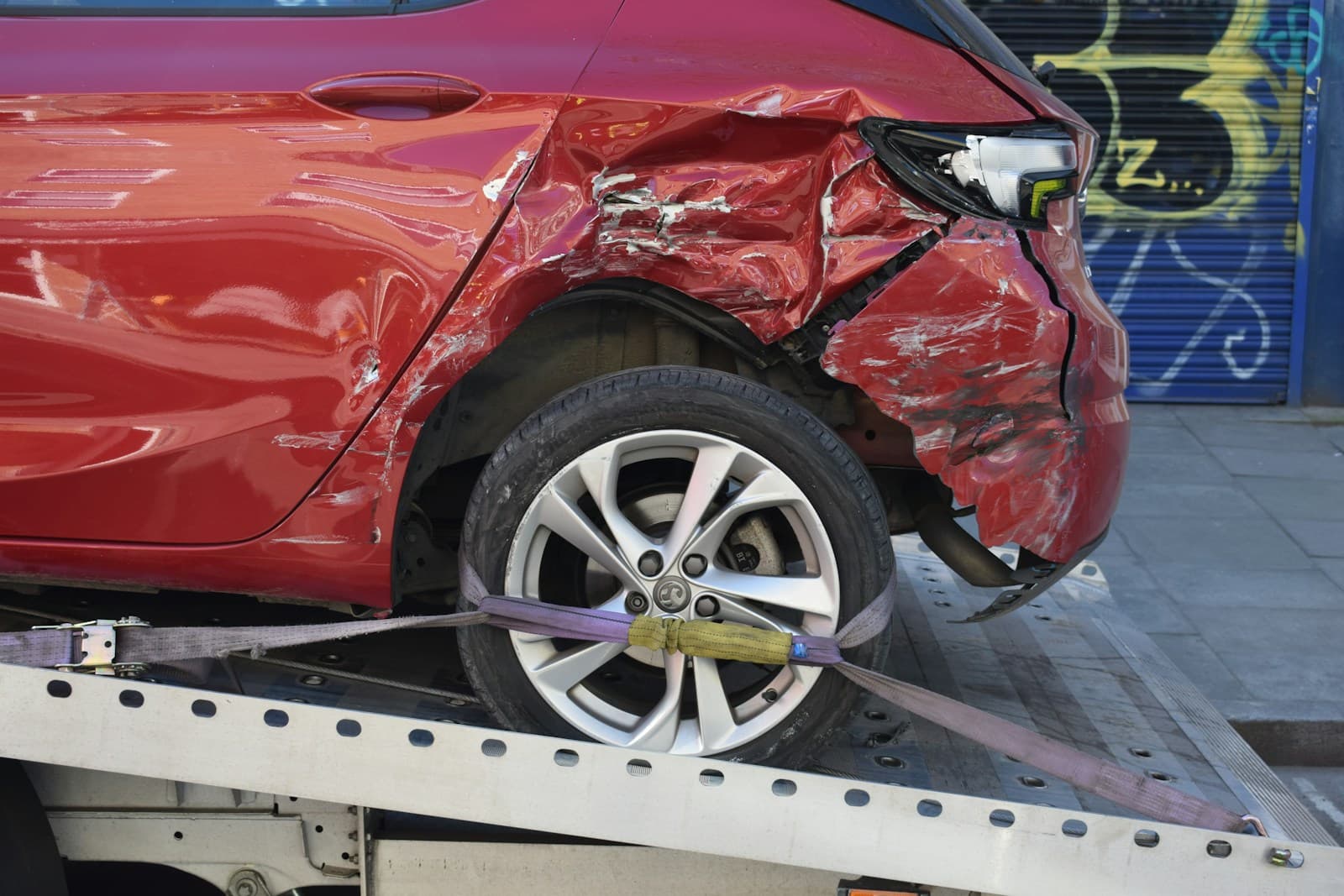
Consider a two-car accident where you're at fault: you injure two people and total a 2019 Honda CR-V. The first injured person has $30,000 in medical bills. Your policy pays the per-person maximum of $25,000, leaving you personally liable for $5,000. The second person has $18,000 in bills — your policy pays that in full. But you've now used $43,000 of your $50,000 per-accident limit, leaving just $7,000 available.
The damaged CR-V is worth $22,000. Your property damage coverage maxes out at $20,000, so you owe the remaining $2,000 out of pocket. Total personal exposure in this single crash: $7,000. That's the gap between what minimum coverage provides and what the accident actually cost.
Multi-vehicle crashes create worse exposure. If you cause a chain-reaction accident injuring four people, your $50,000 bodily injury limit gets divided among all claims. If each person has $20,000 in medical bills — $80,000 total — your policy pays $50,000 and you're sued for the remaining $30,000. Illinois law allows injured parties to pursue wage garnishment and asset liens to collect judgments against at-fault drivers.
What Minimum Liability Never Covers
Your 25/50/20 policy pays nothing for damage to your own vehicle. If you cause an accident and total your car, you receive zero compensation unless you've purchased separate collision coverage. For drivers of older vehicles worth under $3,000, collision coverage often costs more annually than the vehicle's value — making minimum liability the rational choice.
Your policy also provides no coverage for your own medical bills after an at-fault crash. Illinois doesn't require personal injury protection (PIP) the way some states do. If you're hospitalized after causing an accident, your health insurance covers those costs — or you pay out of pocket if uninsured. Your auto liability policy only pays for other people's injuries.
Hit-and-run crashes, uninsured driver collisions, and comprehensive losses like theft or hail damage require separate coverage types. Minimum liability is exactly that: coverage for your legal liability to others when you cause a crash. Everything else — your vehicle, your injuries, losses from weather or crime — falls outside that scope entirely.
Who Should Stick With Minimum Coverage
Drivers of vehicles worth under $4,000 often make the mathematically correct choice staying at minimum liability. If your car's value is $2,500 and full coverage costs $140/mo, you'd pay $1,680/year to protect a $2,500 asset — poor math even accounting for total loss scenarios. Just maintain the state-required liability to cover others.
Drivers with limited assets face less financial risk from personal liability. Illinois exempts certain assets from judgment collection — including up to $15,000 in personal property, tools of trade, and specific retirement accounts under 735 ILCS 5/12-1001. If you rent your home, own an older vehicle, and have minimal savings, a plaintiff who wins a $40,000 judgment against you may recover little even after winning. Your risk profile differs significantly from a homeowner with equity and investments.
Some cost-conscious drivers consciously accept the liability gap as a calculated trade-off. If you drive rarely, avoid high-traffic periods, maintain your vehicle carefully, and stay alert behind the wheel, your accident probability drops. Paying $180/year more for higher limits might feel unnecessary if your driving patterns minimize risk. That's a personal risk tolerance decision — just make it with clear understanding of what you're accepting.
When to Consider Higher Liability Limits
Homeowners and drivers with significant savings should seriously consider 100/300/100 coverage despite the added cost. Illinois courts regularly award judgments exceeding minimum policy limits in serious injury crashes. If you own a home with $80,000 in equity, a $70,000 judgment against you creates a lien against that property — the plaintiff can force a sale to collect.
Frequent highway drivers face higher-severity crash risk. The difference between a 25 mph fender-bender and a 70 mph interstate collision is exponential in terms of injury severity and vehicle damage. If your commute involves daily interstate driving or you regularly transport passengers, the probability of exceeding minimum limits in a worst-case scenario increases meaningfully.
Drivers in high-litigation areas like Cook, DuPage, and Lake counties encounter plaintiffs' attorneys more willing to pursue excess judgments. Medical costs run higher in Chicago metro areas, and juries award larger verdicts. The same crash that generates a $35,000 settlement downstate might result in a $90,000 judgment in Chicago — making higher limits more relevant for metro drivers even if vehicle value doesn't justify comprehensive or collision coverage.
How Illinois Enforces Minimum Coverage Requirements
Illinois uses an electronic insurance verification system that cross-references DMV registration records with insurer databases. If your policy lapses, the Secretary of State receives notification and may suspend your registration and license under 625 ILCS 5/7-205. Reinstatement requires filing SR-22 proof of insurance and paying a $100 reinstatement fee.
Police officers can verify insurance status during traffic stops through their in-vehicle systems. Driving uninsured carries penalties up to $1,000 for first offense, plus potential vehicle impoundment. The state treats lapses seriously — even a gap of a few days between policies can trigger suspension notices if the system flags it.
The state also requires insurance information at accident scenes. If you're in a crash and cannot provide proof of coverage, you face both civil liability for all damages and separate criminal penalties for driving uninsured. The other driver's uninsured motorist coverage might cover their losses initially, but that insurer will pursue reimbursement from you directly — with no policy limits to cap their collection efforts.