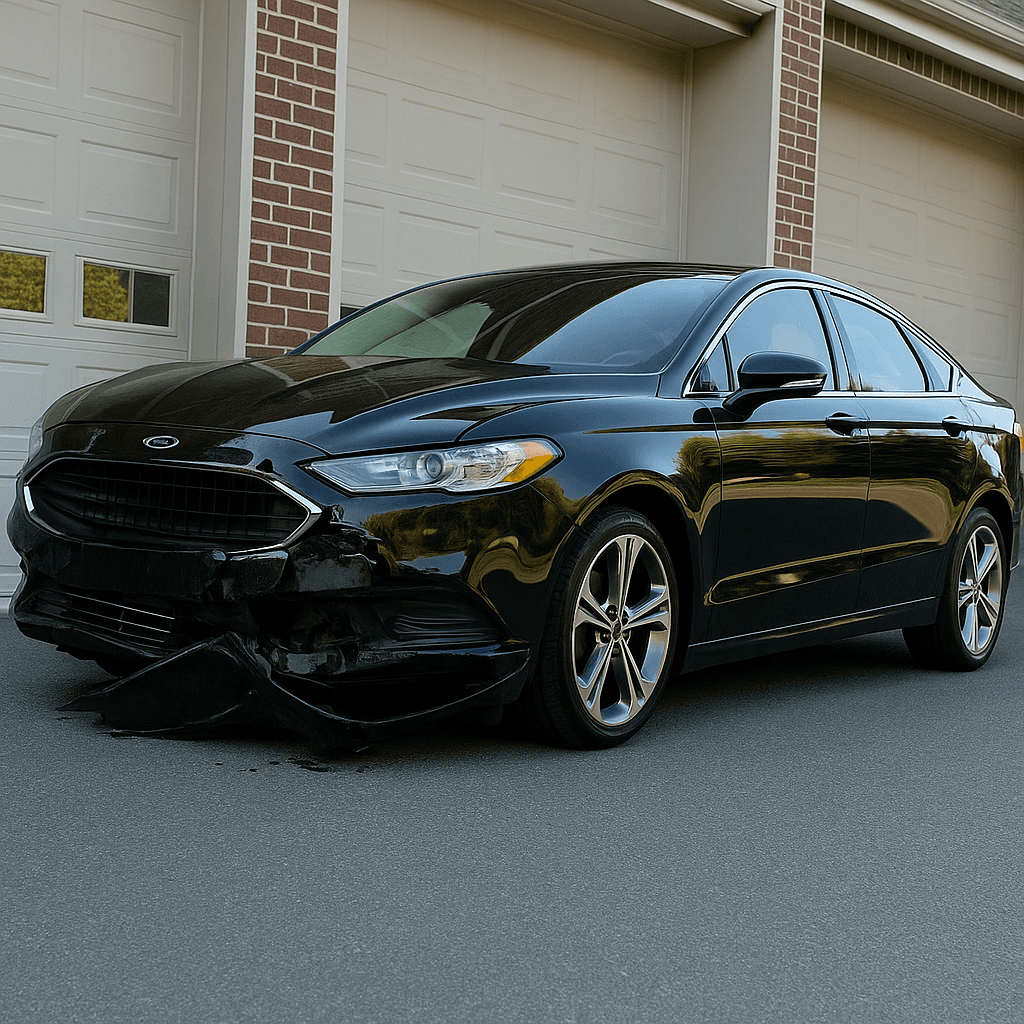
Liability insurance covers damage you cause, not your own vehicle. This guide breaks down exactly what you're protected from — and what you're financially responsible for — when you carry the minimum.
What Liability Insurance Actually Pays For
Liability-only coverage consists of two components: bodily injury liability and property damage liability. Bodily injury liability pays for medical bills, lost wages, and legal costs when you injure someone in an at-fault accident — up to your policy limits. Property damage liability covers repairs to other vehicles, buildings, fences, and fixed objects you damage, plus legal defense if you're sued.
Most states require minimum split limits like 25/50/25, meaning $25,000 per person for injuries, $50,000 total per accident for all injuries, and $25,000 for property damage. These limits are frequently inadequate: the average injury claim settles for $20,235 according to 2022 Insurance Information Institute data, but severe injuries routinely exceed $100,000. A totaled 2020 vehicle averages $28,000 to replace — already beyond most state minimums for property damage.
The national average for liability-only insurance runs approximately $58/mo, compared to $142/mo for full coverage according to 2023 industry data. That $84/mo difference ($1,008 annually) is precisely what you're not paying for collision and comprehensive protection on your own vehicle. If your car is worth less than $3,000–$4,000, that annual premium savings often justifies accepting the risk of self-funding repairs.
What Liability Insurance Never Covers
Liability coverage provides zero protection for your own vehicle in any scenario. If you cause an accident, back into a pole, or sideswipe a guardrail, repairs come entirely from your pocket. The same applies to non-collision damage: hail, theft, vandalism, fire, flooding, and animal strikes are all uncovered events under a liability-only policy.
You also receive no compensation for your own medical bills after an at-fault accident — your health insurance becomes the primary payer, subject to your deductible and co-pays. Liability insurance covers injured parties in other vehicles, not you or your passengers. If you lack health coverage, an at-fault accident can leave you with unmanageable medical debt alongside a totaled vehicle you must replace out-of-pocket.
Liability insurance won't cover your costs if an uninsured driver hits you, either. Roughly 12.6% of drivers nationwide operate without insurance according to 2022 Insurance Research Council data, and those rates climb to 20–30% in states like Mississippi, Michigan, and Tennessee. Without uninsured motorist coverage — a separate add-on typically running $8–$12/mo — you're pursuing a potentially unrecoverable claim against an individual who likely lacks assets.
Find the minimum coverage that meets your state's requirements
Compare liability-only rates from carriers in your state — and see what discounts you qualify for.
Get Your Free Quote✓ Minimum Coverage Options✓ No Obligation✓ Licensed Carriers✓ All 50 States
When You're Hit by Someone Else: The Liability Limit Problem
If another driver causes an accident, their liability insurance should cover your vehicle damage and injuries — but only up to their policy limits. When an at-fault driver carries state minimums of $25,000 property damage and your 2019 sedan needs $18,000 in repairs, the claim processes smoothly. When they carry those same minimums and your vehicle is totaled at $32,000, you face a $7,000 shortfall.
The at-fault driver becomes personally responsible for damages exceeding their coverage, but collection is rarely straightforward. If they carry minimum insurance, they typically lack substantial assets to pursue through civil judgment. Underinsured motorist coverage — averaging $10–$15/mo as an add-on — bridges this gap, but it's not included in liability-only policies unless you specifically request it.
This coverage gap hits hardest in multi-vehicle accidents. If an at-fault driver with 50/100 limits injures four people requiring $40,000 each in medical treatment, the $100,000 per-accident cap gets divided proportionally — each claimant receives roughly $25,000 instead of their full documented costs. The remaining $135,000 becomes an asset recovery problem, not an insurance claim.
The Financial Exposure Math for Older Vehicles
The decision point between liability-only and full coverage hinges on vehicle value relative to annual premium cost. Collision coverage on a 2015 sedan worth $8,000 might cost $35/mo with a $1,000 deductible, while comprehensive adds another $18/mo. That's $636 annually to protect a depreciating asset — after the deductible, you're insuring $7,000 of value at a cost of 9.1% per year.
If your vehicle is worth less than 10 times your annual collision and comprehensive premium, the math generally favors liability-only coverage for cost-conscious drivers. A 2010 vehicle worth $4,500 with $50/mo in physical damage coverage ($600 annually) crosses that threshold immediately. After two claim-free years, you've paid $1,200 in premiums to protect an asset now worth perhaps $3,800 — the coverage has cost more than reasonable depreciation would suggest.
This calculation assumes you can absorb a total loss without financing a replacement. If losing your vehicle would force a high-interest auto loan or disrupt your ability to reach work, that changes the risk equation significantly. Some drivers in this position opt for liability-only coverage while maintaining an emergency fund equal to 50–75% of their vehicle's value — a self-insurance model that costs nothing when claims don't occur.
State Minimum Requirements and What They Leave Uncovered
State minimum liability requirements vary dramatically, from Texas at 30/60/25 to California at 15/30/5. That California minimum provides only $5,000 for property damage — insufficient for most modern vehicle repairs. A moderate rear-end collision easily generates $8,000–$12,000 in damage to a newer vehicle, leaving you personally liable for the excess even while carrying legally compliant insurance.
Several states require additional coverage components beyond basic liability. New Hampshire remains the only state with no mandatory insurance requirement, though drivers must prove financial responsibility after violations. Virginia allows drivers to pay a $500 uninsured motorist fee instead of buying insurance, though this fee provides zero accident protection. Florida and Michigan mandate personal injury protection (PIP) as part of minimum coverage, adding $15–$40/mo to baseline costs depending on coverage limits selected.
Whether your state requires 25/50/25 or 30/60/25, these minimums reflect political compromise, not actuarial adequacy. They represent the lowest coverage lawmakers deemed acceptable — not what insurance professionals recommend or what accident costs typically demand. Raising liability limits from state minimums to 100/300/100 typically adds only $12–$20/mo, providing substantially better protection against personal asset exposure if you cause a serious accident.
Real Scenarios Where Liability-Only Leaves You Paying
You're backing out of a parking space and don't see a shopping cart return structure — $2,400 in rear bumper, sensor, and tailgate damage. Liability insurance pays nothing. You finance repairs through a payment plan with the body shop, or drive with cosmetic damage and malfunctioning parking sensors.
A deer runs into your vehicle on a rural highway at dawn, causing $5,800 in front-end damage. Comprehensive coverage would handle this minus your deductible, but liability-only leaves you covering the full cost. Your 2014 vehicle is drivable but needs hood, grille, headlight, and radiator replacement. You source used parts and find a budget shop, reducing the repair to $3,200, but that's still money out of your emergency fund.
An at-fault driver with minimum 25/50/10 coverage totals your vehicle valued at $11,500. Their property damage liability pays the $10,000 limit. You're owed $1,500 from a driver who likely has no recoverable assets — the reason they carried minimum coverage. Without underinsured motorist property damage coverage, you're either accepting the $1,500 loss or pursuing a civil judgment that may never collect. This scenario plays out thousands of times daily across drivers who assumed the other party's insurance would make them whole.
When Adding Coverage Beyond Liability Makes Sense
If your vehicle is financed or leased, lenders require collision and comprehensive coverage — liability-only isn't an option until the loan is satisfied. Even with an older paid-off vehicle, certain situations justify broader coverage despite the additional cost.
Drivers with limited savings should consider whether a $4,000–$6,000 unexpected expense would create financial hardship disproportionate to the premium cost. If replacing your vehicle would require high-interest financing or disrupt your employment, $40–$50/mo in additional coverage may be cheaper than the financing costs and life disruption of an uninsured total loss.
Uninsured and underinsured motorist coverage deserves particular attention in states with high uninsured driver rates. New Mexico, Mississippi, and Michigan all exceed 20% uninsured drivers. In these states, adding UM/UIM coverage at $10–$18/mo protects you against a risk that manifests in roughly one in five accidents. This isn't theoretical: it's a known, measurable exposure that compounds every time you drive.