Michigan's no-fault system forces you to buy coverage you can't use against other drivers—and minimum policies leave massive gaps. Here's what the law requires, what it costs, and where you're exposed.
Why Michigan's No-Fault System Costs More Than Other States
Michigan operates under a pure no-fault insurance system, meaning your own insurance pays for your medical bills and lost wages after an accident—regardless of who caused it. This creates a structural cost difference: Michigan drivers purchasing state minimum coverage still pay approximately $29–$47/mo, compared to $18–$28/mo in neighboring fault-based states like Ohio or Indiana for comparable liability limits.
The cost stems from mandatory Personal Injury Protection (PIP), which covers your medical expenses and wage loss. Even if you choose the lowest legal PIP option ($50,000), this component alone typically adds $15–$22/mo to your base premium compared to states where medical coverage is optional. The 2019 no-fault reform allowed drivers to opt out of unlimited PIP for the first time in decades, but even minimum PIP coverage costs significantly more than liability-only policies in fault states.
For cost-conscious drivers with older vehicles, this matters: you're legally required to carry coverage that protects you medically, but minimum property damage limits mean you may still owe thousands out-of-pocket if you cause damage to another vehicle or fixed object. Michigan's system prioritizes injury protection over property protection—a trade-off that doesn't align with every driver's risk profile.
Michigan's Actual Minimum Coverage Requirements and Dollar Limits
Michigan law requires four coverage components. Bodily injury liability is $50,000 per person and $100,000 per accident, covering injuries you cause to others. Property damage liability is $10,000, covering damage to other vehicles or property. Personal Injury Protection starts at $50,000 (the minimum opt-down level if you have qualifying health insurance), covering your own medical bills regardless of fault. Property Protection Insurance (PPI) is $1 million, covering damage you cause to parked vehicles and fixed objects like buildings or fences.
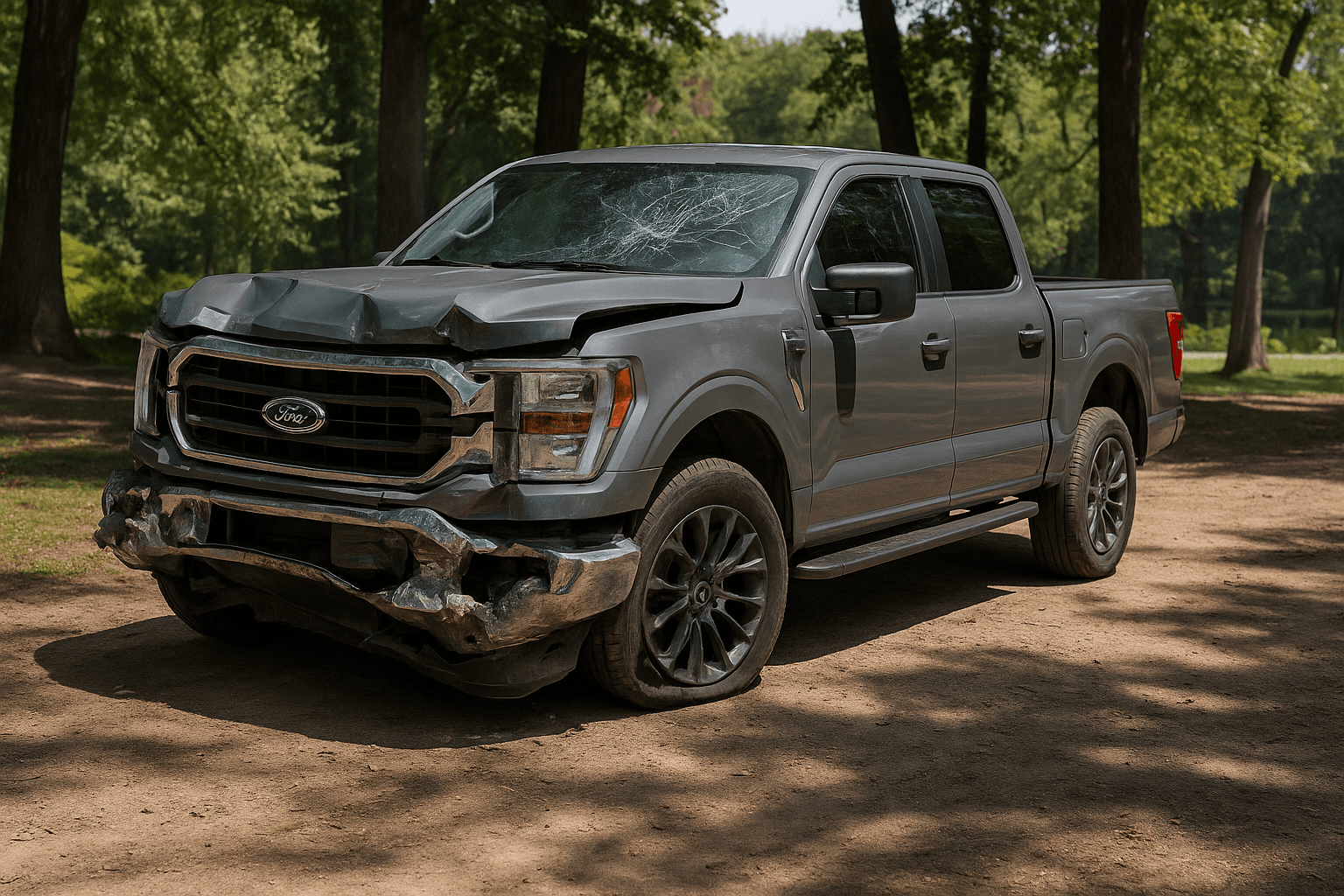
The $10,000 property damage limit is deceptively low. The average repair cost for a totaled 2018 sedan exceeds $14,000. If you rear-end a newer pickup truck and cause $22,000 in damage, your policy pays the first $10,000—you're personally liable for the remaining $12,000. PPI doesn't help here because it only covers parked cars and structures, not vehicles in motion.
The $50,000 PIP minimum only applies if you have health insurance that qualifies under Michigan law (Medicare, Medicaid, employer group health, or individual marketplace plans). If you lack qualifying health insurance, you must carry at least $250,000 in PIP, which typically raises monthly premiums from $29–$47/mo to $65–$95/mo depending on your ZIP code and driving record.
Find the minimum coverage that meets your state's requirements
Compare liability-only rates from carriers in your state — and see what discounts you qualify for.
Get Your Free Quote✓ Minimum Coverage Options✓ No Obligation✓ Licensed Carriers✓ All 50 States
What Minimum Coverage Won't Pay For: The Exposure Gaps
Minimum Michigan coverage leaves three major financial gaps. First, damage to your own vehicle is never covered—collision and comprehensive are optional. If you cause an accident that totals your 2012 Civic, you receive $0 from your insurer. If your vehicle is worth less than $3,000 and you're paying $29–$47/mo for minimum coverage, collision insurance at an additional $35–$55/mo rarely makes financial sense.
Second, property damage beyond $10,000 comes directly from your assets. Michigan allows injured parties to pursue your bank accounts, wages, and property if your liability limits are exhausted. A single accident causing $18,000 in vehicle damage could result in an $8,000 judgment against you, plus court costs. Increasing property damage liability from $10,000 to $50,000 typically adds only $6–$11/mo, but whether that trade-off is worth it depends on your asset exposure and monthly budget.
Third, your PIP limit applies per accident, not per year. If you choose $50,000 PIP and sustain $73,000 in medical bills from a serious crash, your health insurance becomes primary after your PIP exhausts—subject to deductibles, copays, and network restrictions your PIP coverage would have bypassed. The Michigan Catastrophic Claims Association (MCCA) covers expenses above $580,000 for unlimited PIP policies, but drivers who opt down to $50,000 receive no catastrophic backstop.
Monthly Cost Breakdown: Minimum vs. Mid-Level Coverage in Michigan
For a 35-year-old driver in Detroit with a clean record driving a 2010 sedan, minimum legal coverage averages $47/mo (20/40/10 liability, $50,000 PIP, standard PPI). Increasing property damage to $50,000 raises the monthly cost to $54/mo. Adding $100,000 in PIP brings the total to $68/mo. A mid-level policy with 100/300/50 liability and $100,000 PIP typically costs $81–$97/mo.
In Grand Rapids, the same driver pays approximately $32/mo for minimum coverage, $37/mo with higher property damage, and $51/mo for mid-level coverage. The geographic variation reflects ZIP-based claim frequency and repair costs—minimum coverage in Detroit costs 47% more than in Grand Rapids despite identical legal requirements.
For drivers with vehicles worth under $4,000, adding collision coverage typically costs $28–$48/mo with a $500 deductible or $19–$34/mo with a $1,000 deductible. A vehicle worth $2,500 would need to last more than 30 months without an at-fault accident to justify $35/mo in collision premiums—a calculation most budget-conscious drivers correctly skip.
PIP Opt-Down Rules: When You Can Choose $50,000 Coverage
Michigan allows PIP reduction to $50,000 only if you maintain qualifying health insurance. Qualifying coverage includes Medicare Parts A and B, Medicaid, TRICARE, employer-sponsored group health plans, individual marketplace plans purchased through Healthcare.gov, and private policies certified as qualified health coverage under the Affordable Care Act.
Short-term health plans, health sharing ministries, and fixed indemnity plans do not qualify. If your health insurance lapses at any point during your auto policy term, you're required to notify your insurer within 30 days and increase your PIP coverage—or your policy may be canceled. Failing to maintain qualifying health insurance while carrying $50,000 PIP can void your coverage entirely.
Drivers without qualifying health insurance must carry at least $250,000 in PIP, though they can opt for $500,000 or unlimited coverage. The premium difference is substantial: $50,000 PIP with health insurance costs approximately $15–$22/mo, while $250,000 PIP without health insurance costs $52–$78/mo for the same driver profile. If you're on a fixed income without employer health coverage, purchasing a marketplace plan during open enrollment may lower your combined health and auto insurance costs.
How No-Fault Affects Your Options After an Accident
Under Michigan's no-fault system, you cannot sue the at-fault driver for medical expenses, lost wages, or pain and suffering unless your injuries meet the state's serious impairment threshold—defined as death, permanent serious disfigurement, or serious impairment of body function. This restriction applies even if the other driver was clearly negligent and you sustained $40,000 in medical bills.
Your own PIP coverage pays your medical expenses and 85% of your lost wages up to three years, regardless of fault. If you chose $50,000 PIP and your medical costs reach that limit, you cannot then pursue the at-fault driver's insurance for the remainder—your health insurance becomes primary. This differs fundamentally from fault-based states, where the at-fault driver's bodily injury liability pays your medical bills and you retain the right to sue for full damages.
Property damage works differently. You can file a claim against the at-fault driver's property damage liability for vehicle repairs, but only up to their policy limit. If they carry Michigan's $10,000 minimum and cause $16,000 in damage to your vehicle, you can sue them personally for the $6,000 difference—but collecting that judgment is your responsibility. Mini-tort coverage allows you to recover up to $3,000 for vehicle damage not covered by insurance, but only if you carry collision coverage or the at-fault driver lacks insurance entirely.
When Raising Limits Makes Sense (and When It Doesn't)
Increasing property damage liability from $10,000 to $50,000 costs $6–$11/mo and makes sense if you own a home, have significant savings, or earn wages subject to garnishment. A single accident involving a newer vehicle could exceed $10,000 in damages, exposing your assets to a civil judgment. For drivers renting housing with minimal savings and income below garnishment thresholds, the additional $72–$132/year may not justify the protection.
Raising bodily injury liability from 50/100 to 100/300 costs approximately $8–$14/mo. This protects you if you cause a serious accident where multiple people are injured, but Michigan's no-fault system already covers most medical expenses through each driver's PIP. Bodily injury liability primarily pays for expenses PIP doesn't cover—pain and suffering, medical bills exceeding PIP limits, or injuries to out-of-state drivers not covered by Michigan no-fault. If your monthly budget allows less than $40/mo total for insurance, keeping minimum liability and avoiding at-fault accidents is a more realistic strategy than stretching to higher limits.
Increasing PIP from $50,000 to $100,000 or $250,000 costs $15–$28/mo. This makes sense for drivers with high-deductible health plans, those whose health insurance has narrow networks, or anyone whose income depends on immediate return to work. For drivers with comprehensive Medicare or employer plans with low out-of-pocket maximums, $50,000 PIP combined with health insurance typically provides adequate coverage at the lowest cost.